• Lari Clinic Tower, 4th Ring Road, Hawally, Kuwait
Eisa Lari
Eisa Lari

Gynecomastia Surgery in Kuwait — Male Chest Contouring & Treatment

Many men in Kuwait live with gynecomastia for years before seeking treatment. Some avoid the gym, swimming pools, fitted clothing, or even everyday social situations because of how their chest looks.

Gynecomastia is extremely common and can affect teenagers, athletes, bodybuilders, and adults of all ages. In many cases, exercise alone cannot remove true gland tissue. When gland tissue is present, specialist gynecomastia surgery and male chest contouring are often required to restore a flatter, more masculine chest shape.

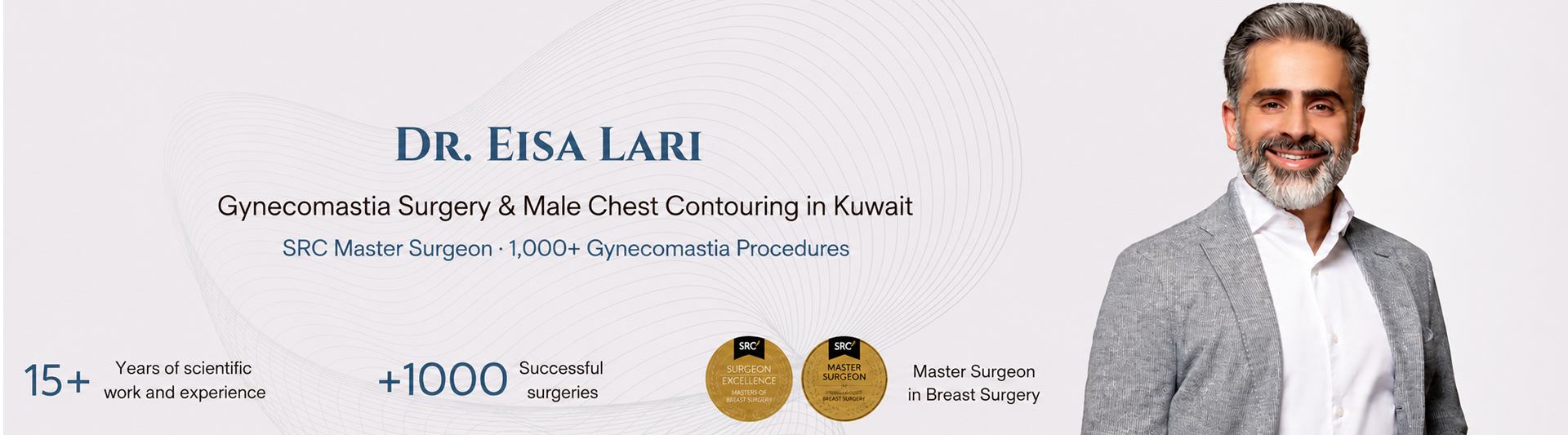
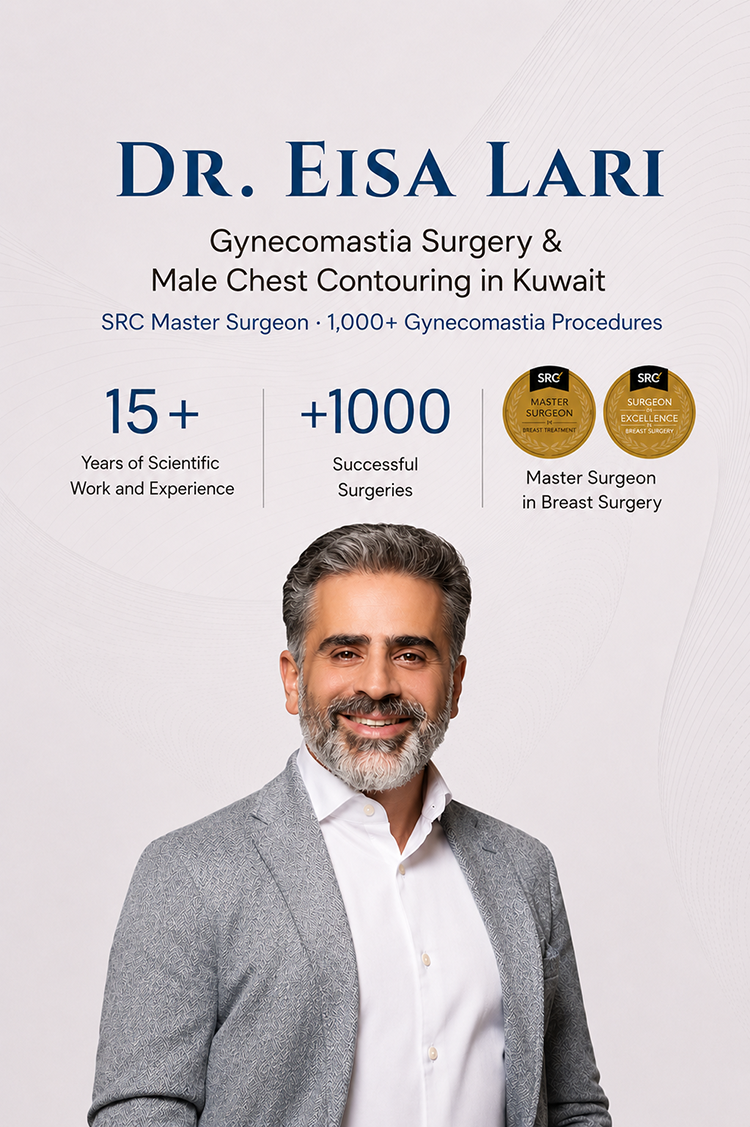
At Lari Clinic, Dr. Eisa Lari, an SRC Master Surgeon with experience in more than 1,000 gynecomastia procedures, focuses on individualized treatment plans based on chest anatomy, skin quality, gland volume, and overall body structure.

The goal is not simply tissue removal, but natural-looking male chest contouring with minimal visible scarring, balanced proportions, and a recovery plan tailored to each patient.


Master Surgeon by SRC Dr. Eisa Lari
About Dr. Eisa Lari

Gynecomastia Surgeon in Kuwait

Dr. Eisa Lari, Specialist Gynecomastia surgeon in Kuwait, dedicated to helping men achieve natural, confident results. As a Master Surgeon certified by the Surgical Review Corporation (SRC) in breast surgery, he has performed more than 1,000 gynecomastia procedures, with individualized treatment plans tailored to each patient’s chest anatomy and goals.

Patients from Kuwait and the GCC choose Dr. Lari for his focus on chest contour, proportion, and masculine definition — prioritizing results that look balanced and natural in and out of clothing.

Dr. Lari’s Approach to Gynecomastia Surgery

Dr. Lari’s approach goes beyond the standard surgical procedure. He is dedicated to delivering results that look and feel natural, using advanced, minimally invasive methods designed to reduce recovery time, minimize scarring, and enhance patient comfort.

Specialization in Gynecomastia

Dr. Lari focuses exclusively on gynecomastia management and male breast reduction, giving him a unique depth of knowledge in this area.

Why Patients Choose Dr. Eisa Lari
  • Graduate of the Royal College of Surgeons in Ireland (RCSI)
  • SRC Master Surgeon in Breast Surgery
  • SRC Surgeon of Excellence in Breast Surgery
  • Specialist Breast Surgeon at Jaber Al-Ahmad Hospital Breast Unit
  • President, Kuwait Men's Health Association
  • Over 1,000 Gynecomastia Procedures Performed
  • Active Researcher in Male Chest Contouring and Gynecomastia Surgery
SRC Master of Surgeons
SRC Surgeons of Excellence
ACS
RCSI
Kuwait Association of Surgeons
Male Chest Correction

What Is Gynecomastia?

Gynecomastia is the enlargement of breast tissue in men, caused by excess gland tissue, fat, or — most commonly — a combination of both. Unlike general chest fat, true gynecomastia often includes firm glandular tissue beneath the nipple and areola, which may present as chest fullness or puffy nipples.

Many men with gynecomastia are otherwise healthy and active. In Kuwait and across the region, it is often seen in teenagers, athletes, bodybuilders, and adults after hormonal changes or weight fluctuation.

Gynecomastia Treatment
Specialized Care Gynecomastia

Common causes include:

  • Hormonal imbalance
  • Genetics
  • Weight changes
  • Steroid use
  • Certain medications
  • Puberty-related hormonal changes

Many patients in Kuwait incorrectly assume the condition can always be treated with exercise. While weight loss may improve chest fat, gland tissue usually requires surgical removal.

Gynecomastia vs Chest Fat

Chest fat is primarily excess fatty tissue across the chest, often improving with weight loss. Gynecomastia involves firm gland tissue beneath the nipple area. Many patients have both — which is why examination and individualized planning matter before surgery.

Classification

Grades of Gynecomastia

Gynecomastia is commonly classified into four grades based on gland size, skin excess, and chest contour. Understanding the grade helps determine the most appropriate gynecomastia surgery and male chest contouring approach.

01

Grade 1 Gynecomastia

Small enlargement of gland tissue beneath the nipple, often causing puffy nipples without excess skin.

02

Grade 2 Gynecomastia

Moderate enlargement of gland tissue and chest fullness extending beyond the nipple area, typically without significant excess skin.

03

Grade 3 Gynecomastia

Significant chest enlargement with mild to moderate skin laxity and increased chest fullness.

04

Grade 4 Gynecomastia

Severe enlargement with substantial excess skin and tissue, often resulting in a chest contour resembling a developed breast.

Treatment is individualized based on the grade of gynecomastia, skin quality, chest anatomy, and patient goals — from correction of puffy nipples and mild gland enlargement to advanced chest contouring and skin tightening procedures for more severe cases.

Surgical Philosophy

Dr. Eisa Lari’s Approach to Gynecomastia Surgery

Dr. Eisa Lari has performed over 1,000 gynecomastia procedures using a highly standardized approach focused on male chest contouring and aesthetics.

Every patient is evaluated individually based on:

  • Chest anatomy
  • Skin quality
  • Nipple position
  • Amount of gland tissue
  • Fat distribution
  • Muscle definition

The goal is not simply a “flat chest,” but a natural masculine contour that fits the patient’s body structure.

Surgical planning differs significantly between athletes, bodybuilders, younger patients, and men with significant weight loss or skin laxity.

Recovery

Gynecomastia Recovery Timeline

First Week

Mild swelling, tightness, bruising, and temporary numbness are common. Most patients can return to desk-based work within a few days.

Weeks 2-4

Swelling gradually improves and chest contour becomes more defined. Compression garments are typically worn for approximately one month.

Exercise & Gym

Walking is encouraged immediately after surgery. More strenuous exercise, weight training, and chest workouts are usually resumed gradually based on individual healing.

Final Results

Residual swelling continues to improve, scars mature, and the final chest contour becomes increasingly visible.

Scar Care

Gynecomastia Scars

One of the most common concerns before gynecomastia surgery is scarring. In many cases, incisions are placed along the edge of the areola, where scars are typically less noticeable once healed.

The appearance of scars depends on:

  • Surgical technique
  • Skin quality
  • Healing characteristics
  • Severity of gynecomastia

Patients with more advanced grades of gynecomastia, significant skin laxity, or major weight loss may require additional skin tightening procedures, which can result in longer scars than those used for mild gynecomastia.

Athletic Chest Contouring

Gynecomastia Surgery for Athletes and Bodybuilders

Gynecomastia surgery for athletes and bodybuilders requires specialized planning to preserve muscle definition, chest shape, and a natural masculine contour.

Many athletic patients seek treatment for persistent puffy nipples or gland tissue that remains visible despite low body fat and regular training.

Surgical planning must account for:

  • Muscle definition
  • Skin thickness
  • Existing chest development
  • Symmetry
  • Dynamic movement of the chest during exercise

Dr. Eisa Lari has treated athletes, bodybuilders, and highly active patients from Kuwait and across the GCC, with surgical planning focused on preserving chest definition, symmetry, and natural-looking athletic contours.

FAQ's

Frequently Asked Question

To help you feel confident and informed, here are answers to some of the most common questions we receive about gynecomastia and male breast reduction surgery.

Exercise may improve chest fat, but true gland tissue usually does not disappear with exercise alone. Many patients with gynecomastia maintain active lifestyles and low body fat yet continue to notice fullness beneath the nipple area.

Puffy nipples are commonly caused by glandular tissue beneath the areola and are a frequent form of mild gynecomastia. The appearance may become more noticeable in fitted clothing or during warm temperatures.

Anabolic steroid use may contribute to hormonal imbalance and gland enlargement in some patients. The severity can vary depending on individual hormonal response and duration of use.

Chest fat is caused primarily by excess fatty tissue, while gynecomastia involves firm gland tissue beneath the nipple area. Many patients have a combination of both conditions.

In many cases, incisions are placed near the edge of the areola to help minimize visibility. Scar appearance depends on healing characteristics, surgical technique, and the severity of gynecomastia.

Most patients return to office-based work within several days. Swelling gradually improves over several weeks and months, with chest contour becoming more defined over time.

Light walking is encouraged early after surgery. More intense exercise and chest training are usually delayed for several weeks depending on healing and recovery progress.

Recurrence after surgery is uncommon but may occur in certain situations, including significant hormonal changes, weight gain, or continued anabolic steroid use.

Athletes and bodybuilders often require a more specialized approach due to low body fat, chest muscle definition, and skin quality. Over-resection may create unnatural contour irregularities in lean patients.

Dr. Eisa Lari has performed over 1,000 gynecomastia procedures with a strong focus on male chest aesthetics and natural masculine contouring. Surgical planning is individualized based on anatomy, skin quality, gland volume, and patient goals.