To help you feel confident and informed, here are answers to some of the most common questions we receive about gynecomastia and male breast reduction surgery.
Gynecomastia is the enlargement of male breast tissue caused by excess gland tissue, fat, or a combination of both. Many patients in Kuwait and the Middle East countries commonly refer to the condition as “gyno,” especially within gym and fitness communities.
Gynecomastia may develop due to hormonal imbalance, genetics, puberty-related hormonal changes, weight fluctuations, certain medications, or anabolic steroid use. In many patients, multiple factors may contribute simultaneously.
Gynecomastia is extremely common among teenagers, adults, gym-goers, and athletes in Kuwait and Middle East countries. Many patients seek consultation after years of attempting to improve the chest appearance through exercise and weight loss alone.
Exercise may improve chest fat, but true gland tissue usually does not disappear with exercise alone. Many active patients with low body fat percentages continue to notice fullness or puffiness beneath the nipple area despite regular training.
Puffy nipples are commonly caused by gland tissue beneath the areola and are a frequent form of mild gynecomastia. The appearance may become more noticeable in fitted clothing, warm environments, or after exercise.
Chest fat is caused primarily by excess fatty tissue, while gynecomastia involves firm gland tissue beneath the nipple area. Many patients have a combination of both gland enlargement and chest fat.
Gynecomastia is commonly seen in gym-goers, athletes, and bodybuilders. Lean patients may notice the condition more prominently because low body fat percentages make gland tissue and nipple fullness more visible.
Anabolic steroid use may contribute to hormonal imbalance and gland enlargement in some patients. The severity varies depending on genetics, hormonal response, dosage, and duration of use.
Even patients with excellent physical fitness and low body fat may continue to have gland tissue beneath the nipple area. In these cases, exercise alone usually cannot completely flatten the chest.
Gynecomastia ranges from mild puffy nipple deformities to larger grades involving excess skin and chest fullness. Surgical planning differs significantly depending on chest anatomy, skin quality, gland volume, and body composition.
Athletes and lean patients often require a more specialized surgical approach due to visible chest muscle definition and low body fat percentage. Precise contouring is important to preserve natural masculine chest appearance while avoiding contour irregularities.
Most gynecomastia procedures are completed within approximately one hour, depending on the severity of gynecomastia, chest anatomy, and surgical techniques required. During consultation, Dr. Eisa Lari evaluates each patient individually and discusses the expected surgical plan and operative time.
Male chest contouring requires careful attention to anatomy, skin quality, gland volume, nipple position, muscle definition, and chest symmetry. Over-resection or improper contouring may create unnatural chest appearance, especially in lean patients.
Treatment may involve gland excision, liposuction-assisted contouring, skin tightening procedures, or a combination of techniques depending on the severity of gynecomastia and the patient’s anatomy.
Many patients have firm gland tissue beneath the nipple area that cannot be removed through exercise alone. In these cases, direct gland excision is often necessary to achieve a flatter and more natural masculine chest contour.
Some patients may benefit from liposuction-assisted contouring, but many patients also require direct gland excision to properly treat persistent gland tissue beneath the nipple area.
The goal of gynecomastia surgery is not simply a flatter chest, but a natural masculine contour that fits the patient’s anatomy and body structure. Surgical planning is individualized for each patient based on chest anatomy, muscle definition, and skin quality.
In many cases, incisions are placed near the edge of the areola to help minimize visibility. Scar appearance depends on healing characteristics, skin quality, surgical technique, and the severity of gynecomastia.
Patients with larger grades of gynecomastia or significant excess skin may require additional skin tightening or skin reduction procedures depending on chest anatomy and skin elasticity.
Over-resection may create contour irregularities, asymmetry, or an unnatural chest appearance, particularly in athletic and lean patients. Careful surgical planning is important to preserve natural masculine chest proportions.
Recovery after gynecomastia surgery is usually gradual, with most patients returning to light daily activities within several days.
First 1–2 Days: Mild swelling, bruising, tightness, and soreness are common during the early recovery period. Patients are encouraged to limit excessive upper body movement initially.
First Week: Many patients return to office-based work and light activities within the first week depending on recovery progress.
2–4 Weeks: Exercise is gradually resumed over time, although heavier chest training and intense upper body exercise are usually delayed until healing progresses appropriately.
Full Recovery: Chest contour and swelling continue improving gradually over several weeks and months as tissues settle and recovery progresses.
Dr. Eisa Lari provides individualized postoperative recovery guidelines based on surgical technique, chest anatomy, and patient healing characteristics.
Light walking is encouraged early after surgery. More intense exercise and chest training are usually delayed for several weeks depending on healing and recovery progress.
Compression garments are commonly worn for several weeks after surgery to support healing, reduce swelling, and assist chest contouring during recovery.
Initial improvement is often visible early after surgery, although swelling and tissue settling continue improving gradually over several months.
Recurrence after surgery is uncommon but may occur in certain situations, including hormonal changes, weight gain, medication use, or continued anabolic steroid use.
Mild gynecomastia during puberty is common and may improve naturally over time. In some patients, however, gland tissue may persist into adulthood.
Patients seek consultation for concerns including puffy nipples, persistent gland tissue despite exercise, athletic chest contouring, steroid-related gynecomastia, chest asymmetry, and excess skin following weight loss.
Gynecomastia surgery generally provides long-lasting improvement in chest contour. However, significant hormonal changes, weight gain, medication use, or anabolic steroid use may potentially affect the chest appearance in the future.
Maintaining a stable weight and healthy lifestyle may help preserve long-term results.
The cost of gynecomastia surgery in Kuwait varies depending on chest anatomy, gland volume, skin quality, surgical complexity, and the techniques required for treatment.
Some patients may require gland excision alone, while others may benefit from additional contouring or skin tightening procedures.
A detailed consultation allows individualized surgical planning and accurate treatment recommendations based on the patient’s anatomy and goals.
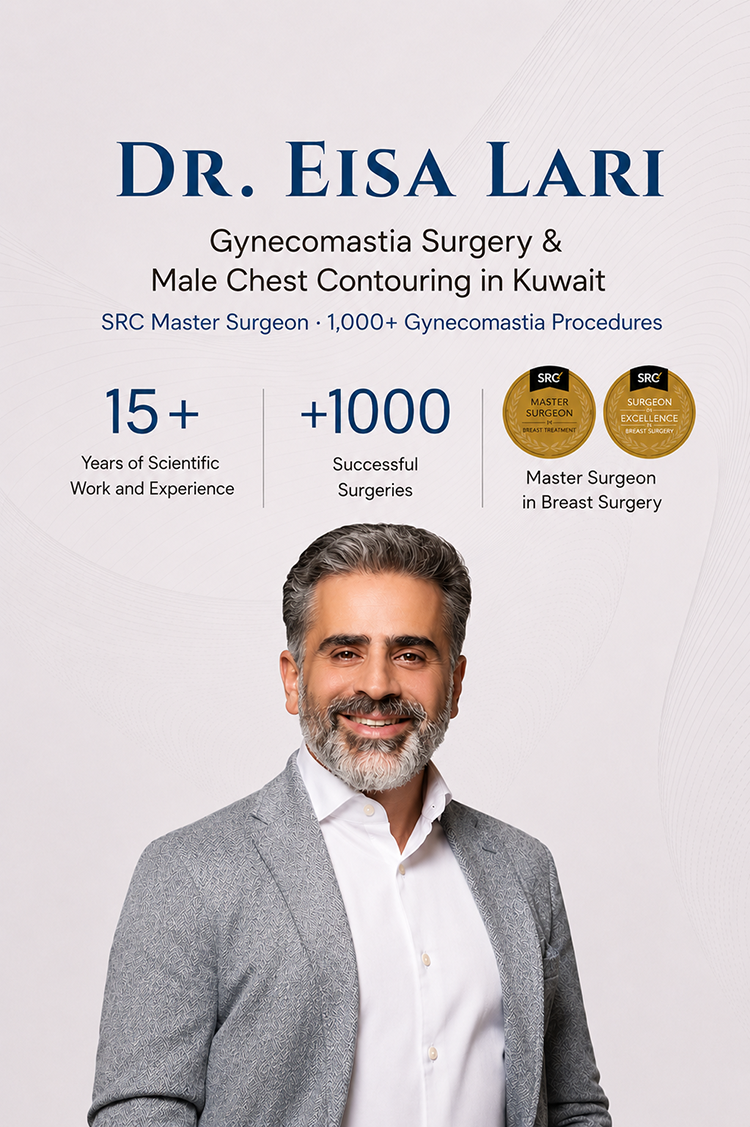
Dr. Eisa Lari has performed over 1,000 gynecomastia procedures with a strong focus on male chest aesthetics and natural masculine contouring. Surgical planning is individualized based on anatomy, skin quality, gland volume, muscle definition, and body composition to create balanced and natural-looking results.
Consultations may be scheduled by contacting Lari Clinic directly by phone / Whatsapp or through the online appointment request form.
During consultation, patients undergo individualized assessment of chest anatomy, skin quality, gland tissue, and treatment goals to determine the most appropriate surgical approach.